A Short History of Georgetown, La.
This short history of Georgetown by Kay Thompson-Brown is copyrighted by USGenWeb Archives at http://www.usgwarchives.org/la/grant.htm
It's a good site with a an extensive collection of local information.
Check it out.
Bill Fullerton
--
GEORGETOWN
The early settlers in the Georgetown area homesteaded on the rivers, Dugdemonic, Castor and Little. Supplies were brought up these rivers and they were kept navigable for a long time. Later these settlers moved farther out and settled on creeks, Bear, Indian, and Fish.
After the building of an East-West Road from the Red to the Mississippi River which passed through Georgetown, and the building of the Three Notch Road from the Ouachita River at Columbia to Alexandria, the number of settlers in this area increased.
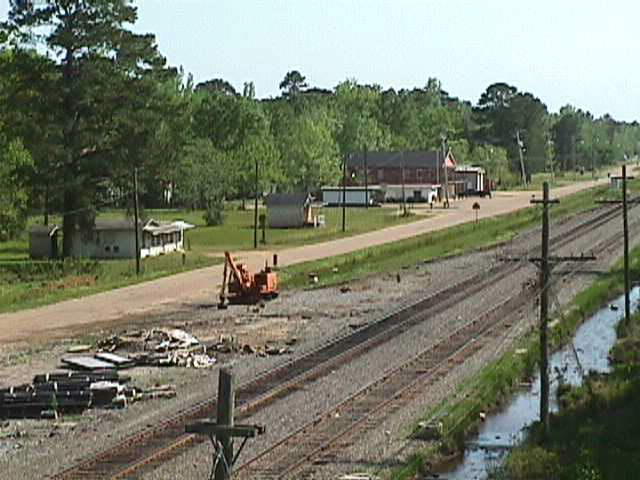
The Missouri Pacific Railroad was built through this area in 1891: built by Jay Gould and was named the Iron Mountain and Southern Railroad. The state of Louisiana gave him every other section of land through which this railroad ran. A depot and section house was built about every five miles along the track, each one having a name. The one at Georgetown was named after Gould's son, George, although there is an interesting ledged of it being named after "hobo George."
The Louisiana and Arkansas railroad was built in 1901. Thus Georgetown became a crossroads for highway and railroad, and became a center from which construction crews were provided with all necessities of the time including lodging, food and drink. This has been the main reason for Georgetown to survive, long after the passing of the sawmills, and the fading away of many other towns.
Among the sawmills to operate in this area were the Old Boston Mill located at Selma, the Georgetown Lumber Company built in 1898, the Grant Timber and Manufacturing Company (three miles) in 1905, and the Tremount Lumber Company at Rochelle in 1907.
Oil was discovered in this area in 1926 and for a short time the town boomed again. Land was leased for a good price, and everybody was happy until the oil stopped flowing, and the great depression of 1929 brought an end to the short lived prosperity.
Today, Georgetown with its modern school facilities, four churches, (Baptist, Methodist, Seven Day Adventists, and Pentecostal) welcoming all who wish to worship, and its quiet peaceful atmosphere and pleasant climate is a good place to live in, retire to, and to visit.
Labels: Georgetown La, grant parish, history
posted by Bill Fullerton at
4:32 PM
15 Comments